

Fasteners Save Lives: Medical technology demands special requirements for fasteners
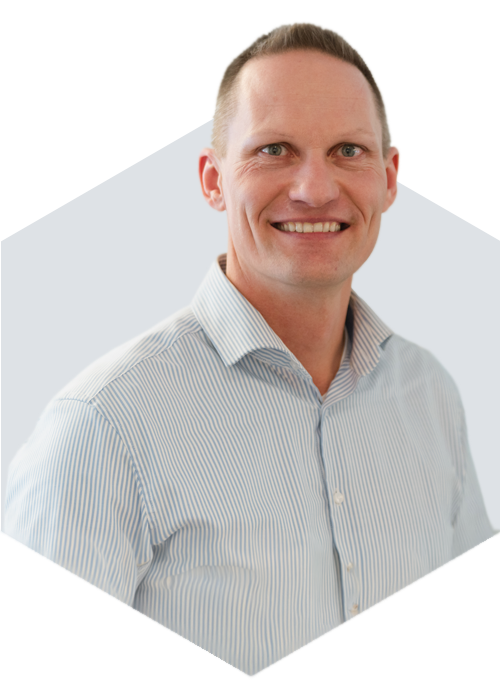
In medical technology, fasteners are by no means simple standard components. They are highly specialised fasteners that often have to perform under extreme mechanical and chemical conditions. In the worst case, failure can be life-threatening. Sebastian Tellke from Daniel Gruppe’s sales team explains why the quality of fastening parts determines the quality of your medical device.
Why requirements for fasteners in medical technology are particularly high
Imagine a hospital bed: a patient gets in, is moved, and lies in it for hours. The bed is disinfected every day, pushed around and exposed to mechanical stress. Every fastening element in that bed must withstand these loads – reliably, over time, without fatigue.
„In medical technology, it’s about life and health. That means fundamentally different safety requirements for connections than in a production machine or a piece of furniture.“
– Sebastian Tellke, Sales, Daniel Gruppe
The difference to other industries are the consequences in case of a failure. A corroded surface, a fatigued fastener joint, a wrongly sized fastener – any of these can be life-threatening in the worst case. This is why fasteners used in medical technology have to meet much higher safety requirements than in many other sectors.
The right connection for your medical device
Fasteners used in medical technology have to meet special requirements. We advise you on materials and manufacturing processes and prepare technical drawings for you. This lets you stay focused on your core expertise.
Let’s talk about your fasteners.
Phone +49 5741 3480-0
Email: info@daniel-gruppe.de
„Technical drawings are actually something like a language of their own, one that someone in China can use just as easily as someone in Germany, France, or the U.S.“
– Christian Meistrell,
Deputy Technical Lead at Daniel Gruppe
The alloy makes the difference
Sebastian Tellke explains: “Stainless steel is more corrosion-resistant (rust-free) and therefore ideal for humid environments. It is also more resistant to many cleaning agents.” The best material for your fastener depends on where it is used:
- Stainless steel is suitable for environments with moisture, alkaline solutions and aggressive disinfectants. Depending on conditions, the exact grade must be selected carefully.
- Special alloys are used where extreme temperatures or specific chemical conditions apply.
- Coatings and surface treatments provide additional corrosion protection and extend service life.
Temperature: an underestimated factor for fasteners and fasteners
Ambient temperature can significantly affect material properties. Tellke shares a real life example: “One of our customers exposes their products to extreme cold. At minus 20°C, steel becomes brittle – so the fasteners have to be sized larger because the material behaves completely differently.” This shows that even seemingly basic parameters like operating temperature can determine the design of a fastening element.
Standard parts vs. custom parts– this is where the real challenge lies
DIN standard parts: proven and standardised
DIN standard parts are standardised, comparable worldwide and have been available for decades. A hex bolt with a metric thread is the same everywhere – regardless of the manufacturer. For many applications, that is sufficient.
Drawing parts and custom parts: developed individually
However, the larger and more exciting area is drawing parts. These custom parts do not exist yet – we develop them together with you.
„For drawing parts and custom parts, we put together the best overall package – technically strong, economically viable, and feasible on the market.“
– Sebastian Tellke, Sales, Daniel Gruppe
This is how we reliably ensure fastener quality: in 3 steps
The quality of fasteners and fastening parts in medical technology must be documented, traceable and verifiable.
1. Fastening parts are checked at multiple levels
Quality assurance follows a multi-stage process:
- At the manufacturer: certified partners produce to defined standards and document every step.
- At Daniel Gruppe in Lübbecke: we review the documents, measure parts and provide you with a comprehensive inspection summary.
- In your company: you inspect the samples and approve the prototype for series production.
2. Compliance and documentation duties: maximum safety for your fasteners
All manufacturers must prove that their products do not contain substances of very high concern. Declarations of conformity and certificates are available to you transparently. In addition, we can trace fasteners back to the raw material – an essential requirement in safety-critical industries.
3. Packaging as a quality feature
Packaging also matters. Tellke recalls: “I once supported a project where the fasteners were visible in the product. They were specially painted and individually packed in plastic blisters so the surface arrived flawless at the customer.”
Depending on requirements, Daniel Gruppe supplies for example:
- Individually in plastic blisters – for flawless surfaces in visible areas
- Pre-packed in labelled bags – for direct further processing
- In mesh boxes on pallets – for high-volume production lines
Real-world example: 100 tonnes of material for hospital beds
A real example shows how large these projects can become. Daniel Gruppe supplied welded subframes for hospital beds – a total of 100 tonnes of material in six to seven 40-foot containers.
“It was an ongoing project over several years. 100 tonnes of material, container after container. It makes you proud to be part of something like that,” Tellke recalls.
The project shows the scope: from a single special fastener to large-scale series of welded assemblies, Daniel Gruppe provides the full path – construction, production and Kanban logistics.
From the first idea to series production
The path from concept to finished fastener follows clearly defined phases. The earlier you involve a technical partner, the more efficient and reliable the process becomes.
The 5 stages of development
- Concept phase: you bring an idea or an existing product that needs to be redesigned. Together we define the initial requirements.
- Development: we optimise existing designs and decide together on material, manufacturing process and sizing.
- Prototypes and samples: approval samples are produced and measured. You test them thoroughly.
- Testing phase: we evaluate the results and make final adjustments.
- Start of series: after mutual approval, large-scale production begins.
„During initial processing, later adjustments may become necessary. That is why I always recommend producing approval samples before series production starts.“
– Sebastian Tellke, Sales, Daniel Gruppe
Conclusion: why connections determine quality in medical technology
In medical technology, there is no acceptable residual risk when it comes to fasteners. They have to withstand special loads and meet safety standards. This requires a partner who understands your needs and translates them into a long-lasting solution. Daniel Gruppe provides construction, prototyping, testing, production and logistics from a single source.
„If you need fasteners for medical technology, you don’t need a catalogue. You want a partner who listens, thinks along, and develops the best solution with you.“
– Sebastian Tellke, Sales, Daniel Gruppe
A custom part is worthwhile when standard parts do not reliably meet the functional requirements (e.g., special head shape, defined installation situation, additional locking function, special cleaning/sterilisation requirements) or when the total life-cycle cost should be reduced. Often, a custom solution is more economical because it simplifies assembly, reduces failure risk, or saves space.
Knowledge that connects
Expertise from engineering, purchasing and manufacturing – written clearly for decision-makers in SMEs.


